

How a Medical Device Maker Built Support Across 30+ Languages
See how a medical device maker used multilingual customer support to grow from 5 to 30+ languages, with device-aware routing and 24/7 coverage.
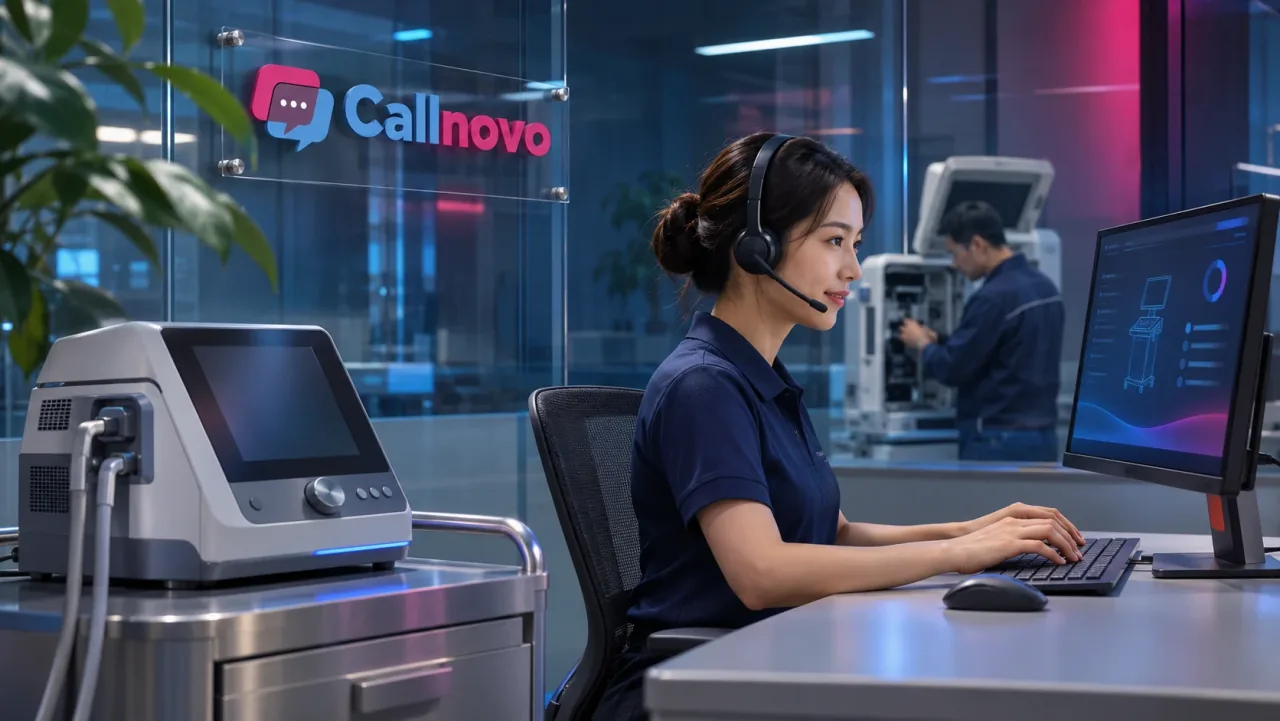
- Staffed call wait 15 sec
- After one year
- First-Contact Resolution 58% → 87%
- After one year
- Calls Covered by Automated QA 100%
- Prior review: <5% manual sample
Multilingual customer support became harder for this medical device manufacturer as its hospital equipment reached more than 120 countries. This anonymous case follows the people, routing and call review it used to serve those markets.
Key Takeaways
- The manufacturer’s after-sales line went from 5 languages to more than 30, and from office hours to 24/7 customer support.
- Callnovo.ai staffed support in 30+ languages with agents trained on the equipment’s terminology. HeroDash handles local numbers, the IVR, time-zone handover and automated call review.
- After one year, staffed calls were answered in about 15 seconds and first-contact resolution rose from 58% to 87%. The earlier 48-hour figure describes replies to after-hours voicemail, a different measure.
- Automated QA covered every call on the account. Previously, the manual review sample covered fewer than 5% of calls; people still reviewed flagged cases.
Picture a 3 a.m. call from a hospital engineer in Berlin: a device shows a fault, and the engineer dials the manufacturer’s service line.
Before 2024, such a call would have reached a voicemail box. The after-sales team worked 9:00 to 18:00 in one time zone and spoke five languages. A caller would leave a message; the case report puts the first reply at about 48 hours.
The equipment sold in 120 countries. Support spoke five languages.
The client came to us in 2024 with two problems that grew with every new market.
The first was language. The equipment was in service in more than 120 countries, and general English didn’t reach many of the people calling. Device vocabulary made it worse. A part name translated loosely can send troubleshooting in the wrong direction.
The second was time. A customer in Germany needed help in the afternoon, when the support team’s day was over. A customer in Brazil called in the morning, near the end of the team’s shift. Anyone calling outside those hours could only leave a message.
There was also a visibility problem. The client reviewed a manual sample covering fewer than 5% of calls, which made it harder to spot recurring support issues across markets.
What we changed to build multilingual customer support
Equipment-trained support across 30+ languages
Callnovo.ai built a team covering more than 30 languages, including German, French, Portuguese, Arabic, Turkish and Thai. Agents trained on the equipment’s approved terminology before taking calls.Local service numbers in target markets
The manufacturer used local numbers in target markets, including Germany, France, Brazil and Indonesia. Customers could dial a domestic-looking service line where one was configured.Three steps before a person answers
The caller says what they need in their own words and the system sorts the request. The caller enters the device serial number and the system pulls up the model, warranty status and service history. The call is then routed by device type, language and urgency.Handover between time zones
When the team in one time zone finishes its shift, calls go to the team that is on shift somewhere else. The caller still dials the local number.Every call transcribed and checked
Calls are transcribed. Each one is checked automatically for whether the device details were recorded, whether the process was followed, whether anything risky was said, and how the customer sounded. Reviewers go through the calls that were flagged.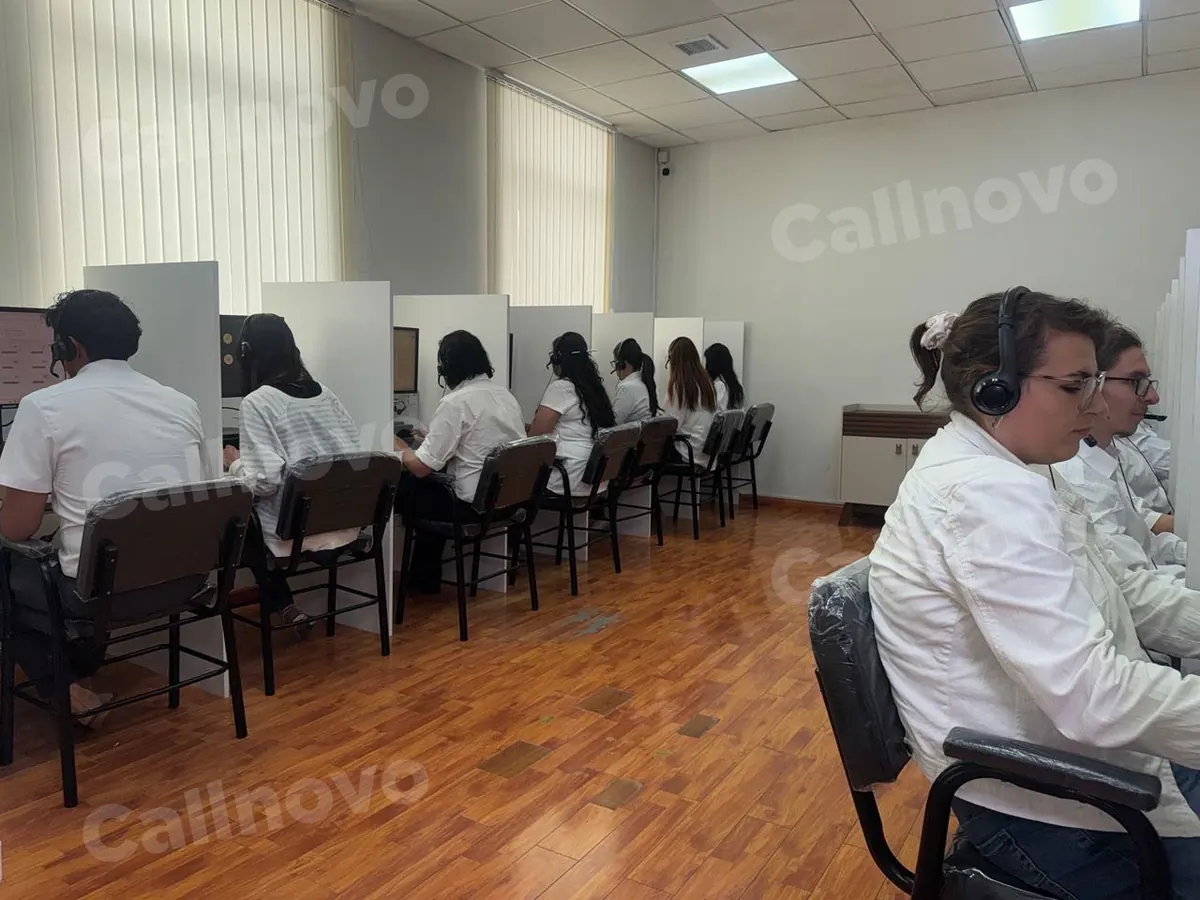
The local numbers, the IVR, the handover rules and the call review all run on HeroDash, our support platform. Its call routing software passes the device record to the next agent. The device model, serial number, warranty status and fault code are custom fields that travel with the call from the IVR to the ticket to the review.
One call, start to finish
Here is how that illustrative Berlin call would move through the redesigned workflow.
The engineer dials the German number. The IVR asks what the call is about, and the engineer says the device is showing a fault. The IVR asks for the serial number. The system finds the device, its warranty status and its last service visit.
It’s the middle of the night in Europe, so the call goes to a team in a time zone where the morning shift has started. A German-speaking human agent picks up with the device record already open. The engineer doesn’t repeat the serial number and doesn’t switch to English.
After the call, the transcript is checked. If the fault code wasn’t logged, the call is flagged for a reviewer.
Results after one year
Medical device manufacturer: before and after one year
Before the change, a caller leaving an after-hours voicemail waited about 48 hours for a reply. With 24/7 staffing, the reported wait for a human answer was about 15 seconds. These are different measures and are not a like-for-like speed calculation.
After-sales service used to be a cost center. Now it's part of how we compete. Customers know that whenever and wherever they call, they'll get professional support right away.
The client, medical device manufacturer, after one year with Callnovo.ai
When this setup is more than you need
A multilingual team covering thirty languages, local numbers in target markets and a three-step IVR can make sense when equipment is in service across dozens of countries and a slow answer keeps a device out of use.
If you sell into two or three markets, a small bilingual team and a shared inbox may cover it. If your call volume is a few calls a day, an IVR may add a step without saving anyone time. And if most of your contacts come through distributors who handle first-line support themselves, start with what the distributors need from you.
Three questions to ask before you outsource device after-sales support
- In which of your markets does a customer currently have to describe a fault in a second language?
- When a customer calls at 3 a.m. their time, does a person answer, and does that person speak their language?
- Who receives a reported device problem, and what information moves with it to the manufacturer’s quality team?
Set that third handoff before launch. The FDA’s current quality-system rule places the quality system with the device manufacturer. The European Medical Device Coordination Group’s vigilance guidance also discusses outsourced complaint handling when explaining when a manufacturer becomes aware of a potential incident. A support agent can capture the device identifier and the caller’s description; the manufacturer needs a named team to evaluate what happens next. Ask separately what share of calls is reviewed and what the review checks.
Callnovo.ai staffed this account through its multilingual support teams. Local numbers come from Global DID, and automated call review is part of HeroScore. We compared ways to review calls in our guide to AI quality assurance software.
Sources
- Callnovo, medical device after-sales case materials supplied to the team; client anonymous.
Performance metrics reflect results from a Callnovo.ai partnership. Client identity withheld. Human agents on this account handle equipment after-sales requests and do not give clinical advice.
Questions buyers ask
- Why does medical device after-sales need multilingual customer support?
- Hospital engineers and distributors call from more than 120 countries, and many do not work in English. Device vocabulary makes it harder. The team covers the required languages and trains agents on the manufacturer's approved equipment terminology before they handle calls.
- How does an IVR route a call about a specific device?
- On this account the IVR does three things in order. The caller says what they need in their own words and the system sorts the request. The caller enters the device serial number and the system pulls up the model, warranty status and service history. The call then goes to a human agent matched on device type, language and urgency. Time spent in the IVR fell from 3 minutes to 30 seconds.
- What happens when a customer calls outside office hours?
- The manufacturer used local numbers in target markets. When one team finished its shift, calls could route to a team on duty in another time zone. Language coverage and escalation followed the agreed schedule. Before the change, callers outside 9:00 to 18:00 could only leave a message.
- Does the support team give clinical advice?
- No. Human agents on this account handle after-sales requests about the equipment itself: faults, warranty, parts, training requests and service scheduling. Questions about patient care stay with the hospital's clinical staff.