
Callnovo

dental

Dental Answering Service for Appointments and Patient Calls

Keep appointment enquiries and patient messages moving when your front desk is busy. Agree which scheduling actions AI or agents may take; clinical questions and patient-specific billing decisions go to your practice team.

Dental answering support collects patient messages, handles appointment requests and follows your approved scheduling rules. Confirmed bookings require access to approved slots and permission to book. Clinical questions and urgent concerns follow the practice-approved route to your team.

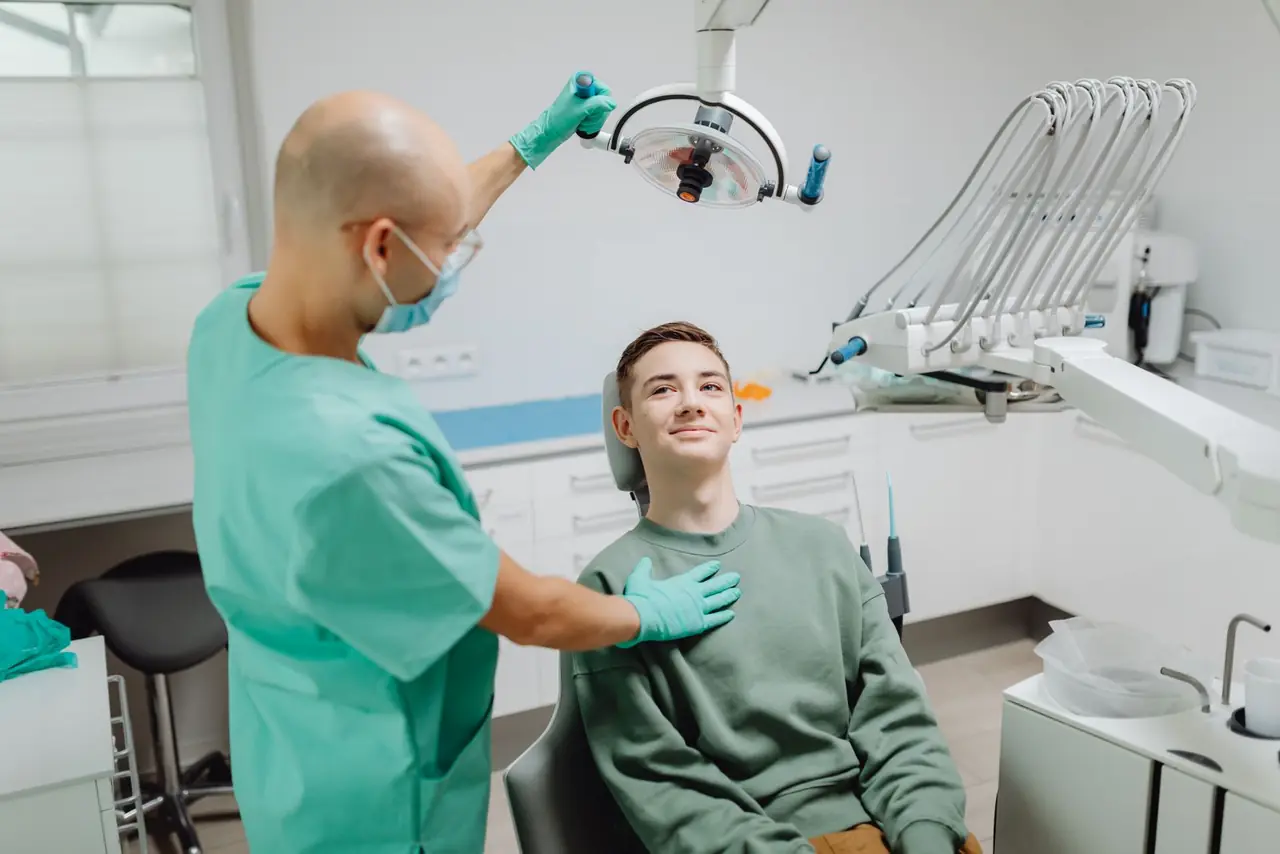
A dentist examining a patient under the dental light

how it plays out

How patient enquiries reach your team

Illustrative call workflows. Confirm the permissions, contact routes and scheduling rules for your practice before using them.

Phone Spanish

“I need to book a cleaning”

Example workflow, subject to practice permissions and calendar access.

  1. Follow the practice’s caller-identification rules
  2. Check authorised appointment types and available slots
  3. Book only when the scheduling system confirms the change; otherwise record a request
  4. Send the approved confirmation or explain who will follow up
Booking or request recorded status reflects the calendar response
SMS English

“Do I really need a crown?”

Treatment questions belong to the dentist who made the plan.

  1. AI recognizes a clinical question and does not answer it
  2. Records the question and the treatment-plan reference
  3. Routes it to the practice for a callback from the dentist or treatment coordinator
  4. Offer a callback window only when accepted by the practice
Clinical question routed decision stays with the dentist
Web Chat Mandarin

“How much will my filling cost with Delta Dental?”

Fee questions can be answered from published fees; a patient’s out-of-pocket cannot.

  1. AI shares the office’s published fee for the procedure and what the office has said about Delta Dental
  2. Collects the member ID for the billing team
  3. Explains that the patient’s own out-of-pocket comes from the billing team
  4. Request a billing callback or an appointment, confirming only when accepted
Billing follow-up requested no out-of-pocket estimate promised
Phone Korean

“My child chipped a tooth at school”

Dental trauma goes to a person working from the practice’s protocol.

  1. A live agent records which tooth, how it happened, when, and any pain or bleeding
  2. Reads the practice’s approved instruction for trauma calls
  3. Reach the on-call dentist or use an authorised slot only after availability is confirmed
  4. Logs what the parent was told and when
Practice alerted protocol followed and logged

the team behind it

Who decides what reaches the on-call dentist.

Callnovo agentCallnovo agentCallnovo agentCallnovo agentCallnovo agent real members of the global team

Coordinators for Dental Practices

  • Recall and reactivation outreach for overdue patients
  • Insurance details collected for your billing team, with published fees only
  • Pain, swelling and trauma routed to the on-call dentist under your protocol

65+ Languages

  • Human agents providing support in 65+ languages
  • Real-time AI translation for rare language pairs
  • Cultural context training for every market we serve

Follow-the-Sun Coverage

  • Operation centres in Canada, Bolivia, Nicaragua, the Philippines and China
  • Smooth handoff between time zones with shared context
  • Holiday and weekend coverage without overtime costs

the part nobody prices in

Plan coverage for the hours your front desk cannot answer.

A new or small practice may receive only a few calls while its team is with patients. Start with your required days, time zone and hours, then separate routine appointment requests from questions that need the dentist or billing team.

For booking and recall work, specify the authorised calendar, appointment types, available slots and who may make changes. When access or availability cannot be confirmed, capture a request for the practice rather than telling the patient a visit is booked.

For clinical concerns, use the practice-approved escalation instructions and named contacts. Agree the backup route if the designated person does not answer.

what it costs

Published rates, so you can do the arithmetic first.

Use these published starting rates to compare options. The proposal should specify coverage hours, included tasks, usage and any additional charges.

OptionPublished pricePer minuteWhat it's for
Live shared team from US$650 / month includes 1,500 min → ≈ US$0.43/min Filling cancellations from your recall list before the chair sits empty
AI voice US$0.15 per minute Booking, rescheduling, hygiene recalls, insurance and fee questions
Web chat US$0.15 per session Website and portal requests that arrive after the office closes
Dedicated agent from US$5.80 per hour, per agent Your emergency protocol, your escalation list, one team that knows your providers

Confirm the staffing model and eligibility for your project before comparing the total cost. Dedicated staffing starts from half a seat; shared coverage is subject to assessment.

Dedicated staffing starts from half a seat. Shared coverage is assessed for the project. Confirm the hours, included tasks, usage and any additional charges in your proposal. Compare answering options for a small business. Billing per resolved issue is a separate model and does not automatically apply to intake or appointment requests.

who takes which call

Route by the cost of getting it wrong.

Agree which requests can be completed, which need confirmation and which must reach your designated contact. Test the fallback route before launch.

The callRoute toCost of getting it wrong
Booking, moving or cancelling an appointment AI An annoyed patient
"Do you take my insurance?" AI A lost new patient
Filling a cancellation from the recall list AI An empty chair — the cheapest revenue you can recover
A patient describing pain Human The call that should have reached the on-call dentist
Swelling toward the eye or neck, trouble swallowing Human A clinical situation that must not wait in a queue
A knocked-out tooth Human A window measured in minutes

Booking and recall actions depend on authorised system access and practice rules. Confirm a visit only after the scheduling workflow accepts it; otherwise keep it as a request for practice follow-up.

setup

Five days to put the right person on it.

Five days is our normal window to staff a live account — that is five days to find and place an agent who fits your business, not five days of software setup. AI voice can go live sooner because there is no hiring step.

your existing software

It goes into your system, with a record of who said what.

We work inside the CRM, practice system or case tool you already run, rather than handing you a second inbox to check. Every contact leaves a timestamped record — who called, what was asked, what was said back, what was promised — because in your line of work the question six months later is not "did someone call" but "what exactly did we tell them". Tell us what you run and we will say straight whether we connect to it today.

what comes off the call

What your on-call dentist gets at 8pm.

A dental emergency call is a record as much as a message. Every call comes back written down, timestamped, under HIPAA-compliant procedures:

  • Patient name, date of birth and callback number, verified to your identification rules
  • Existing patient or new, and which provider they normally see
  • What hurts, where, and in the patient's own words
  • When it started, whether it is getting worse, and whether they can sleep
  • Swelling — where, how much, and whether it has reached the eye or the neck
  • Trauma: knocked-out, loosened or fractured tooth, and how long ago
  • Bleeding that will not stop, especially post-extraction
  • Fever, difficulty swallowing or breathing — the escalate-immediately list

It reaches you by secure message and into your practice system where we connect to it. Swelling near the airway and post-extraction bleeding are the two we always escalate rather than schedule.

where AI should not be

The calls we will not put a bot on.

A patient in pain

Pain descriptions are exactly what automation misreads. A person asks the questions on your protocol, writes the answers down in the patient’s words and gets them to the on-call dentist — who decides whether it waits.

Swelling, fever or trouble swallowing

Facial swelling that is spreading, especially toward the eye or the neck, is not a scheduling problem. A person reads the patient your protocol’s instruction for it and reaches the on-call dentist immediately.

Dental trauma

A knocked-out tooth has a window measured in minutes for the best outcome. A person gives your instruction — how to store it, how fast to come in — and gets you on the phone. Automation asks whether they would like to book an appointment.

Treatment plan and cost disputes

A patient upset about what a crown cost, or about what insurance did not cover, is deciding whether to write a review. That is a person’s conversation, and often yours.

when we're the wrong choice

Three cases where you should hire someone else.

  • You want clinical triage from a licensed professional. We follow your protocol and escalate. We do not assess clinically or give dental advice. If your practice requires a hygienist or dentist evaluating every after-hours call, that is a different service.
  • You want us to quote treatment costs. We can read your published fee schedule and explain what your office has told us about insurance. We will not estimate a specific patient's out-of-pocket, because that depends on a plan we cannot see and a treatment nobody has diagnosed.
  • You are a single-chair practice with a quiet phone. If after-hours calls are rare and your daytime front desk keeps up, a good voicemail and a returned call in the morning is honest and cheaper. The maths works when the schedule has holes or the evenings have pain calls.

questions

What buyers ask before they sign.

How much does it cost?

AI voice is US$0.15 per minute and web chat is US$0.15 per session. Live shared support starts at US$650 per month including 1,500 minutes, subject to project assessment. Dedicated agents start at US$5.80 per hour, with staffing from half a seat. Agree coverage, included work and any additional charges in your proposal.

How fast can you start answering our phones?

Five days is our normal window to staff a live account — that is five days to find and place an agent who fits your business, not five days of software setup. AI voice can go live sooner because there is no hiring step.

Do you answer in Spanish?

Yes, on the same number, with agents in our Bolivia and Nicaragua operation centres — native Spanish, not machine translation. English and Spanish share one queue, and we cover 60+ more languages if you need them.

Can I mix AI and live agents on one number?

That is the normal setup. You decide which call types go to AI and which reach a person, and you can change the split as your volume changes. Nothing about that decision is locked in at signup.

How do you decide what counts as a dental emergency?

You define it and we execute it. Which symptoms qualify, what the patient should be told to do immediately, who is on call, how they are reached and what happens if they do not answer. We work your list rather than a generic one, and every call is logged with a timestamp so you can review whether the rules are right.

Can you fill cancellations from our recall list?

Recall outreach can follow your approved list, contact preferences and scheduling rules. Confirm access to the current calendar and permission to book before offering a slot. If the slot cannot be verified, send the request to the practice for confirmation.

Can a small practice arrange coverage only while the front desk is busy?

Share the days, time zone and hours you need, plus expected volume and call types. We can assess the scope, forwarding rules and staffing arrangement. The proposal should state coverage, minimum charges and who handles unresolved appointment requests.

compliance

HIPAA & Dental Compliance

  • Business Associate Agreement (BAA)
  • PHI handling protocols for dental records
  • Encrypted patient communication channels
  • Annual HIPAA training for all agents

start

Plan coverage around your practice

Share your opening hours, call patterns and appointment rules. Agree what the answering team can confirm and what needs a practice callback.