Privacy note: To protect customer confidentiality, identifying details have been removed.
Key Takeaways
- When a holiday gift arrives late, the customer isn’t calling for a refund. They’re calling because someone they care about might not receive something meaningful — and they want reassurance from a real person.
- TF, a premium Japanese dessert brand, needed US phone support before Valentine’s Day — for cold-chain anxiety, allergy questions, and emotionally charged gift complaints, the same week it launched.
- Three realities ruled out building in-house: fixed headcount that doesn’t scale, email-only coverage that can’t match customer urgency, and unpredictable-but-certain seasonal peaks.
- Month one: email response under an hour, 95%+ satisfaction, zero fixed peak-season headcount — on an operation built to scale, not to be rebuilt.
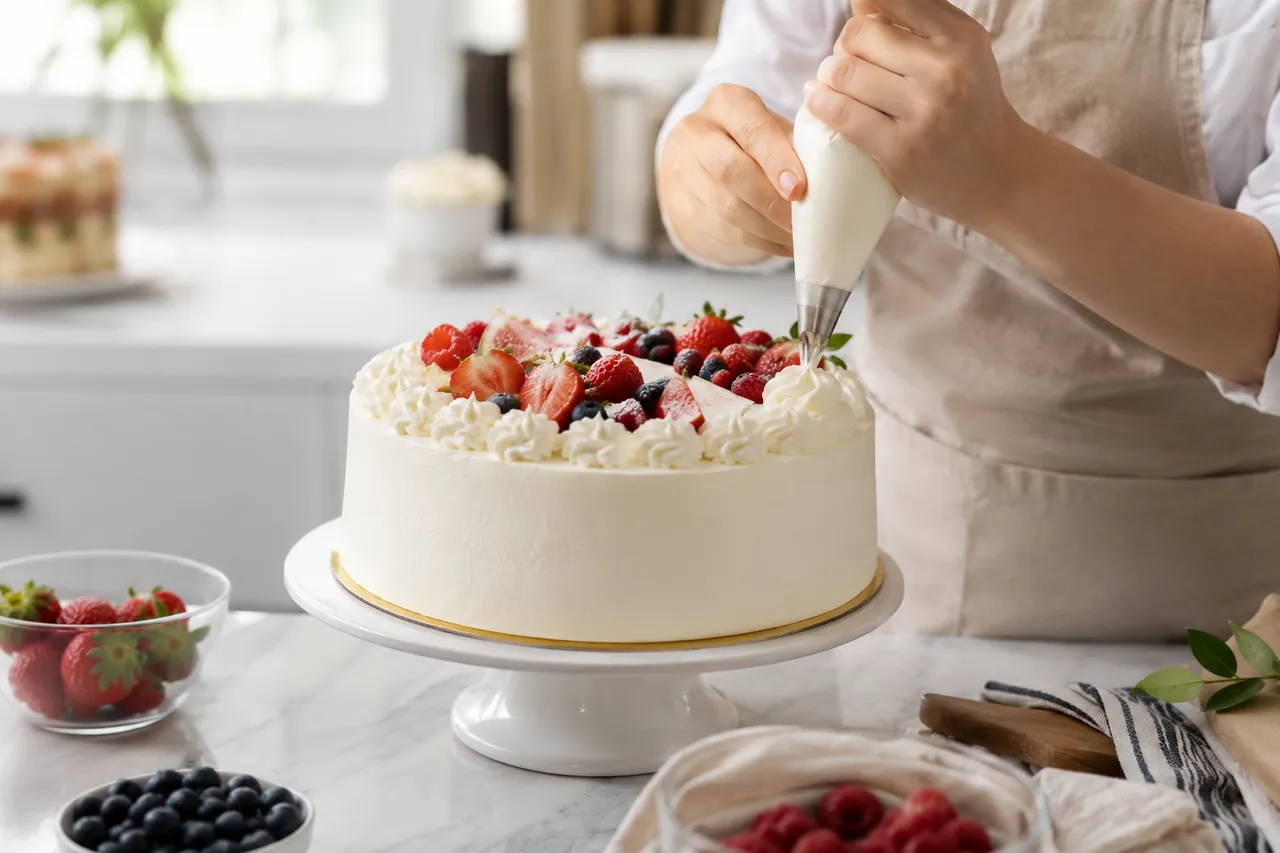
TF is a premium Japanese dessert brand that opened US online sales in 2025 — Japanese-style desserts made with specialty ingredients, sold through a US storefront for pre-orders, holiday gift boxes, and local delivery. Before Valentine’s Day, they needed customer service infrastructure that could handle cold-chain anxiety, allergy questions, and emotionally charged gift complaints — in English, by phone, the same week they launched.
The support problem that’s specific to premium food
Most ecommerce support problems are logistical. Where’s my order. Can I return this. The product isn’t what I expected. These are real problems, but they’re emotionally neutral — the customer wants a practical resolution, and a competent agent who can find one is usually enough.
Premium food is different. Specifically, premium food ordered as a gift is different.
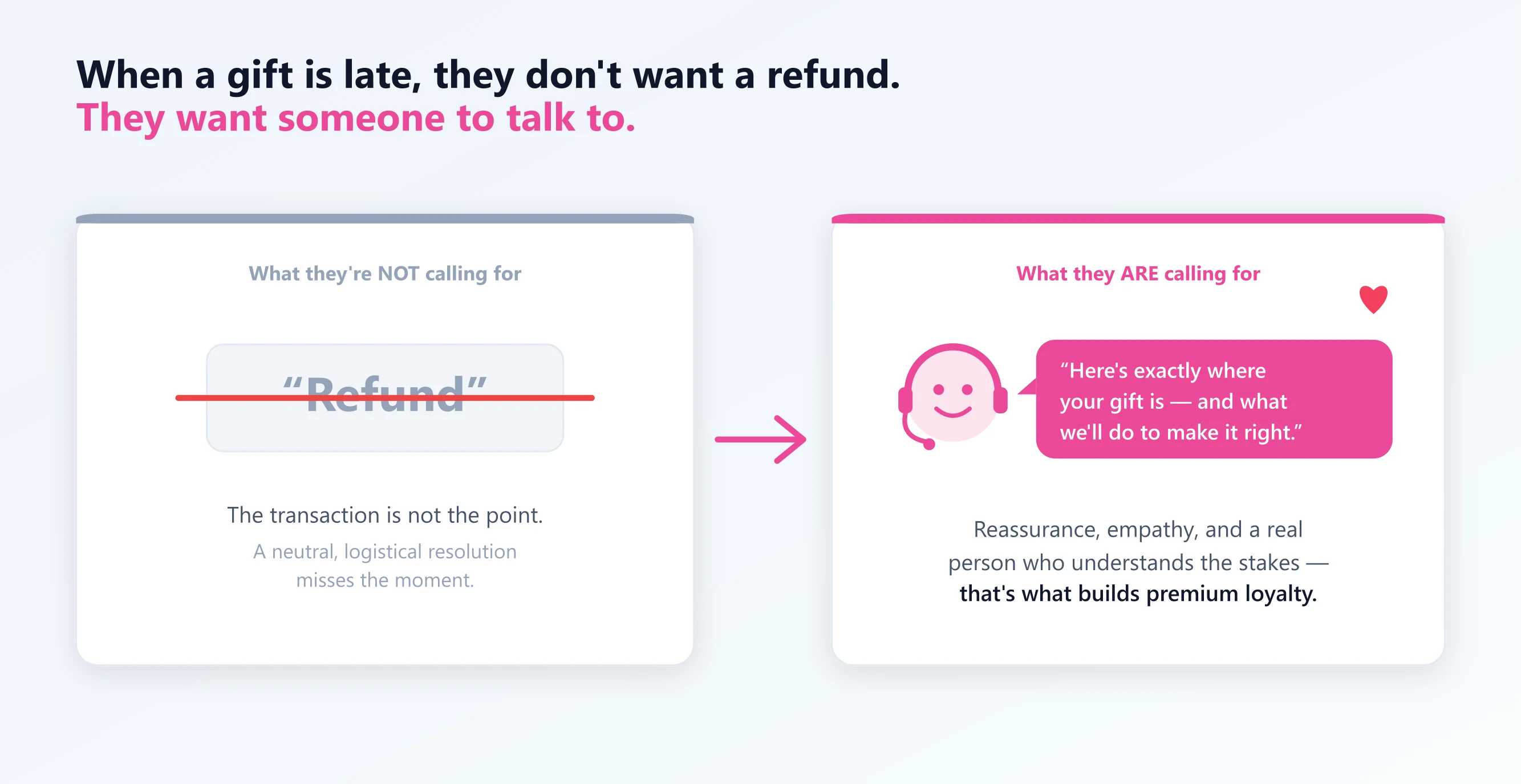
A $90 Japanese pastry box ordered for someone’s birthday doesn’t generate a neutral support inquiry when the delivery is delayed. It generates a call from someone who is stressed, possibly embarrassed, and looking for reassurance that either the box will arrive in time or that something can be done to make the situation right. The customer isn’t angry about logistics. They’re anxious about a person they care about not receiving something that was supposed to be meaningful.
A delayed Valentine’s Day delivery isn’t a minor inconvenience. A slightly melted cake that arrived after the birthday dinner already happened isn’t just a product-quality issue. These situations require support interactions that acknowledge the emotional weight of the moment before they address the logistical facts. This was the challenge TF needed to solve before their US launch — and they needed to solve it fast, before Valentine’s Day demand arrived.
Three problems that ruled out building in-house
TF considered building their own US customer service team. Three specific realities made it impractical at their current stage.
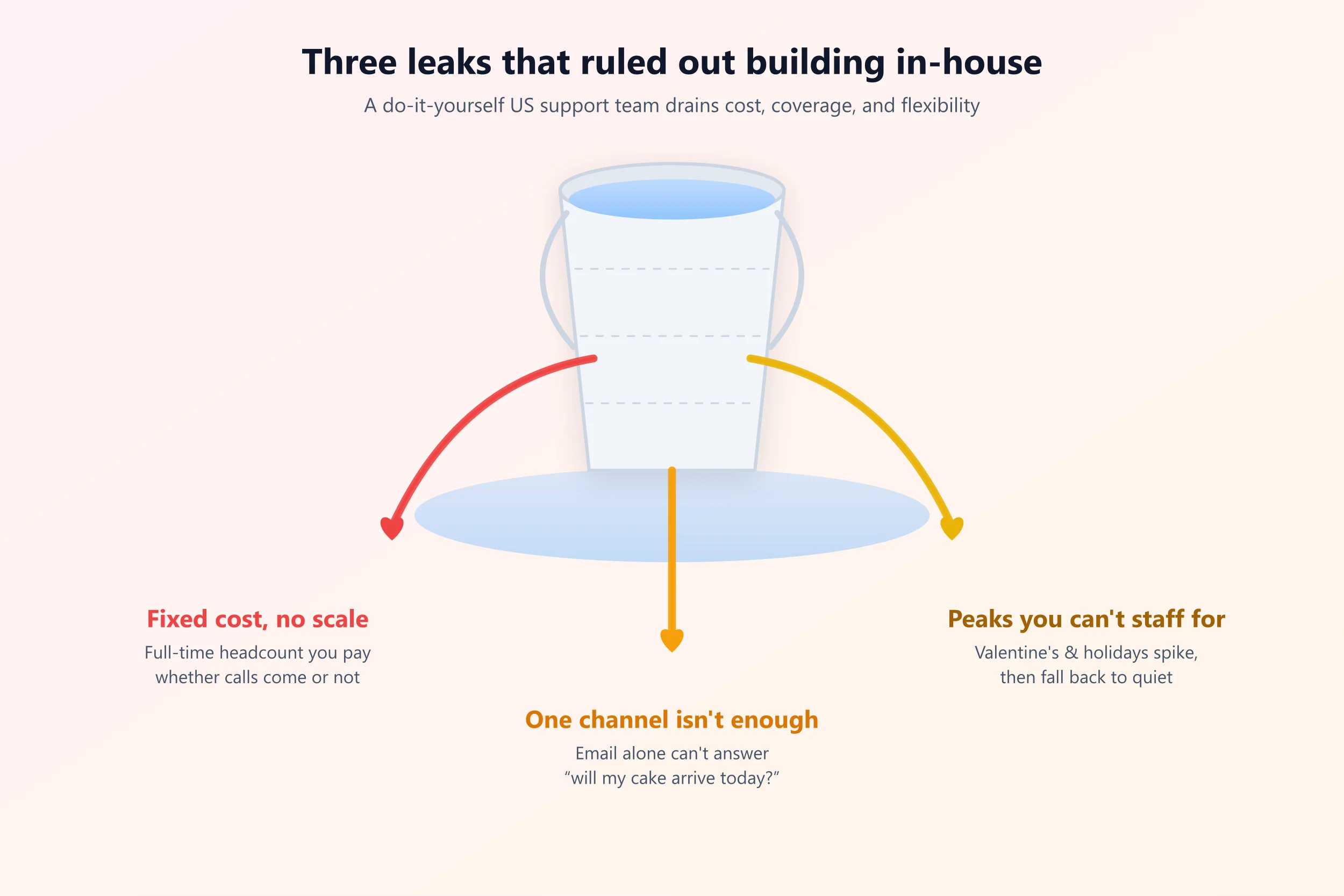
The cost structure didn’t work for early-stage US operations. A full-time English-language operation covering the hours when US customers actually call — evenings, weekends, the day of a delivery — requires staffing commitments that don’t scale with inquiry volume. TF’s US business was growing, but not yet at a scale that justified absorbing fixed headcount costs that would exist whether or not inquiries were coming in.
Email wasn’t enough for this product category. Premium dessert customers calling on delivery day don’t want to wait for an email reply. They want someone on the phone who can check the tracking, confirm the cold-chain status, and tell them whether to be home between 2pm and 6pm. The answer to “will my cake arrive today?” needs to come in minutes, not hours — and nearly 80% of consumers still consider the phone channel important for reaching businesses. Email-only support is structurally inadequate for time-sensitive cold-chain deliveries.
Seasonal peaks were unpredictable but certain. Valentine’s Day. Mother’s Day. Christmas. These generate demand spikes that require temporary capacity expansion, followed by a return to normal volume. Hiring permanent staff for peak demand and carrying them through quiet periods is expensive. Bringing in temporary staff without product training creates the exact inconsistent experience that undermines premium brand positioning.
What the support operation needed to cover
Premium Japanese desserts in the US market generate a specific set of customer interactions that most food brands underestimate until they’re dealing with them in volume.
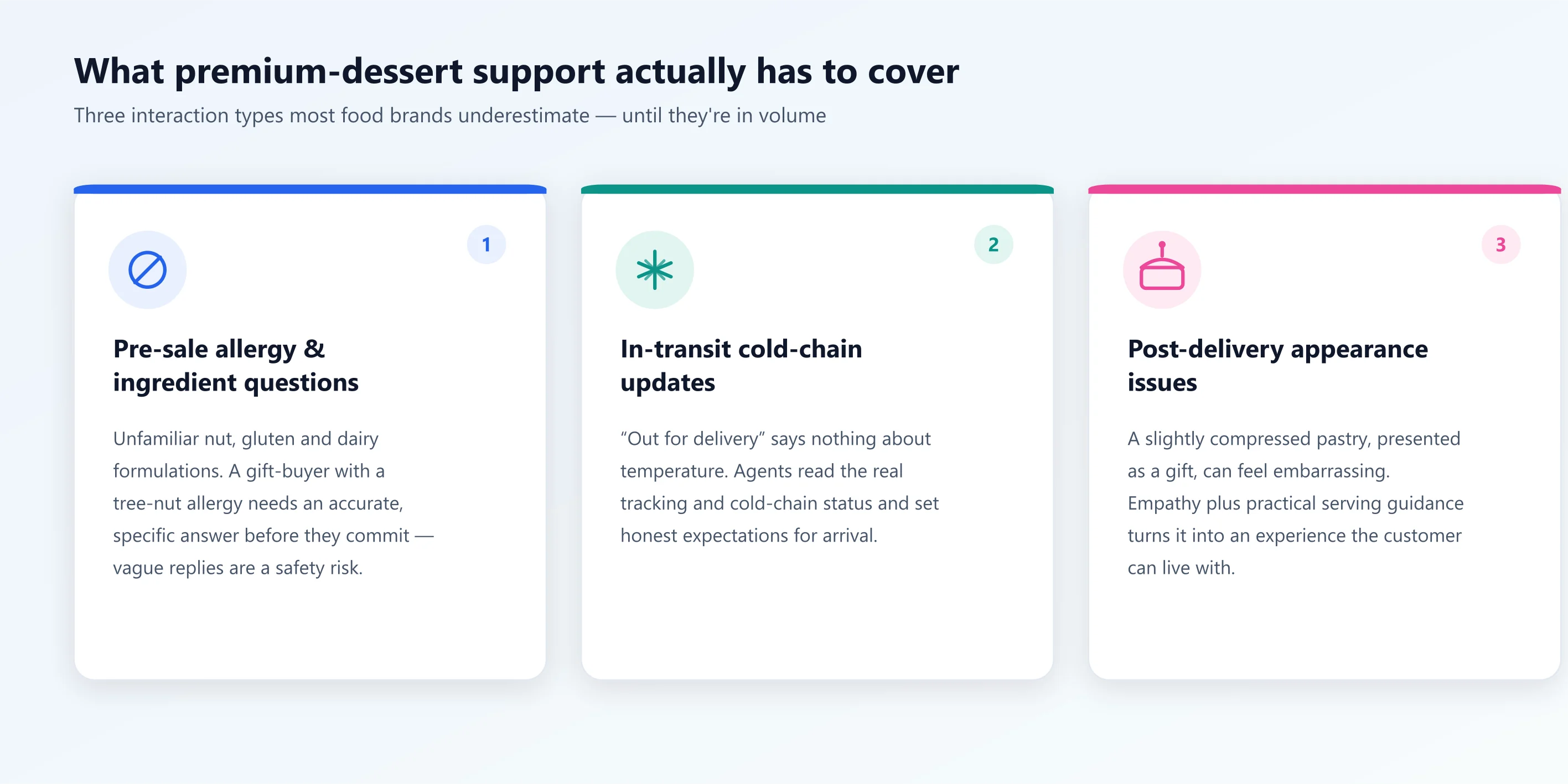
Pre-sale allergy and ingredient questions. Japanese dessert recipes frequently involve ingredients American consumers are less familiar with — specific nut preparations, gluten-containing components in pastry structures, dairy formulations that differ from Western equivalents. A customer with a tree-nut allergy buying a gift for someone else needs accurate, specific information about ingredients and cross-contamination risk before they commit. A vague or incorrect answer creates a safety risk. A confident, detailed, accurate answer gives the customer the certainty they need to complete the purchase.
In-transit cold-chain updates. Cold-chain delivery generates a category of anxiety that standard parcel tracking doesn’t address. “My package is out for delivery” tells a customer very little about whether their temperature-sensitive product is still in good condition. An agent who can access real-time tracking, explain what the temperature data shows, and give a realistic picture of what to expect on arrival is providing genuine reassurance rather than just relaying carrier information.
Post-delivery appearance issues. A premium pastry that arrives slightly compressed, with minor surface imperfections from transport, creates contacts that require careful handling. The customer is often gifting it and may feel embarrassed presenting something that doesn’t look perfect. An agent who responds with genuine empathy, offers practical guidance on presentation and serving, and handles any legitimate quality concern cleanly turns a potentially negative experience into one the customer can live with.
How Callnovo built the support structure for TF
Phone + email now, more channels reserved
The immediate deployment covered the two channels TF’s US customers were using — phone for time-sensitive delivery-window and pre-order inquiries, email for non-urgent questions and follow-up. From day one the setup reserved capability for Shopify integration, Messenger, and WhatsApp on the HeroDash platform, so adding channels as the US business grew wouldn’t require rebuilding from scratch.
Training specific to the product and the customer
Agents were trained on Japanese dessert characteristics, TF’s actual allergy information, the cold-chain process and what customers should expect at each stage, and the communication approach for emotionally charged gift situations. Not generic food-industry content applied to the account — training built around TF’s real products, customers, and the situations they call about.
A dedicated success manager + weekly KPIs
TF received a dedicated customer success manager who built the service workflow, defined performance standards, and delivered weekly reports on response time, satisfaction, and inquiry categorization — giving TF visibility into their US operation without having to run it directly.
Elastic capacity for holiday peaks
For Valentine’s Day and other seasonal events, TF could add agent capacity short-term and scale back when normal volume returned. No permanent headcount, no overtime, no fixed salaries for agents idle during the quiet weeks between peaks.
For a gift that's running late, the customer isn't buying a refund — they're buying reassurance. You have to train and staff for that, not just for ticket resolution.
Neil Fernandez, Operations Manager, Callnovo
What the first month showed
Average email response time stabilized under one hour from the first month of operation. Customer satisfaction crossed 95%. Email reply coverage and resolution efficiency hit the targets TF set going in.
These weren’t a one-off snapshot. They came from the weekly KPI reports TF’s own team reviewed — response time, satisfaction scores, and inquiry categorization — so the numbers were validated on TF’s side, not just reported from ours.
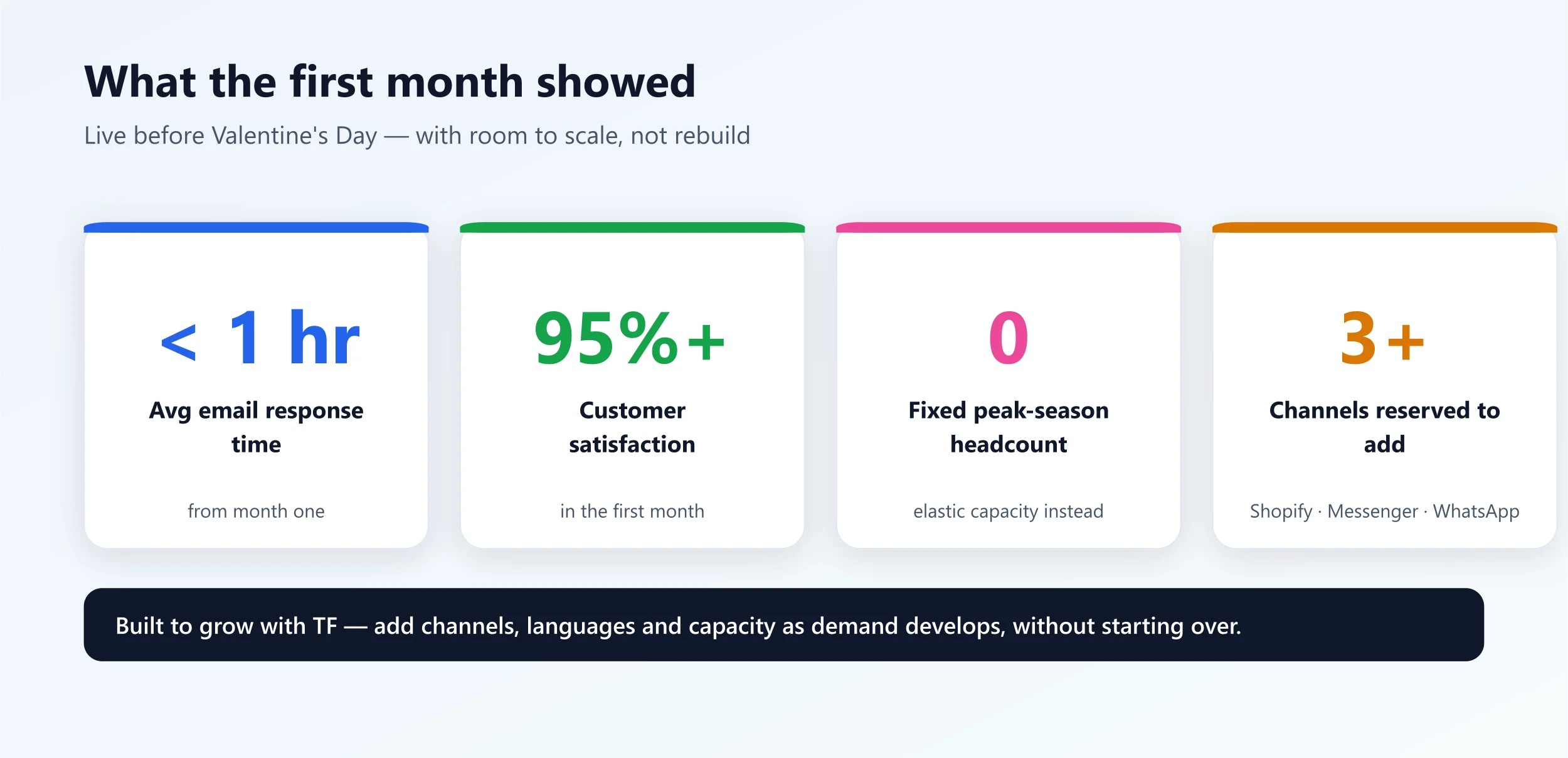
More importantly for TF’s long-term US strategy, the support infrastructure was built to scale without requiring a rebuild. As TF opens additional US locations and expands into new product lines, the customer service operation can grow with them — adding channels, languages, and agent capacity as demand develops — rather than starting from scratch at each stage.
What premium food and gifting brands should take from this
TF’s situation is representative of a specific category of brand entering the US: premium product, emotionally charged purchase occasions, support requirements more complex than the category suggests at first glance, and growth plans that need infrastructure built for where they’re going, not just where they are now. It’s the same pattern behind other cross-border brands building US customer service from launch.
Three things matter more here than in a simpler product category:
- Phone coverage isn’t optional when your product is time-sensitive. Customers who ordered a birthday cake don’t want to wait six hours for an email reply on delivery day. The channel has to match the urgency of the situation.
- Agent empathy training isn’t soft-skills padding — it’s the product. An agent who handles a delayed Valentine’s Day delivery with genuine understanding of what it meant to the customer builds brand loyalty. One who treats it as a logistics ticket creates a customer who won’t order again.
- Building for scale from the start costs less than rebuilding later. The multichannel capability reserved on day one cost almost nothing at launch. Retrofitting it six months in — after the business had grown and expectations had formed — would have cost far more in integration, disruption, and experience degradation.
FAQ
Why does premium food or gift customer service need phone support, not just email?
Because the purchase is time-sensitive and emotionally charged. A customer whose cake is out for delivery on a birthday wants its status in minutes, not hours — and cold-chain products raise questions email can’t resolve fast enough. Phone remains the channel customers reach for when a situation is urgent or personal; nearly 80% of consumers still consider the phone channel important for reaching businesses. For gifting and perishable categories, email-only support is structurally inadequate.
What makes customer service for a gifted food item emotionally different from most ecommerce support?
Most support inquiries are emotionally neutral — the customer wants a practical fix. A premium dessert bought as a gift is different: a delayed Valentine’s Day delivery or a slightly imperfect cake isn’t just a logistics issue, it’s anxiety about a person the customer cares about not receiving something meaningful. These interactions need an agent who acknowledges the emotional weight before addressing the logistical facts.
Should an early-stage brand entering the US build customer service in-house or outsource it?
For most early-stage US operations, outsourcing to a specialist is more practical. Building in-house means fixed headcount that exists whether or not inquiries come in, single-channel coverage that can’t match customer urgency, and no elastic way to handle seasonal peaks. An outsourced specialist team provides trained, multichannel coverage and scales up and down with demand, without permanent overhead.
How do you handle seasonal support spikes like Valentine’s Day or the holidays without permanent staff?
With elastic capacity. Agent hours are added on a short-term basis to cover the higher contact volume during a peak, then scaled back when volume returns to normal — no permanent hiring, no idle salaries between peaks. Because the added agents are drawn from an already-trained pool, quality stays consistent during the highest-stakes weeks.
What do agents need to know to handle allergy and cold-chain questions for premium desserts?
Agents need product-specific training, not generic food-industry content: the brand’s actual recipes and ingredients (including nut, gluten and dairy formulations and cross-contamination risk), the cold-chain delivery process and what customers should expect at each stage, and the communication approach for emotionally charged gift situations. An accurate, confident allergy answer lets a customer complete a purchase; a vague one is a safety risk.
About Callnovo
Callnovo builds and staffs dedicated, product-trained customer-support teams for cross-border brands across 65+ languages, backed by the HeroDash platform — unified omnichannel handling, quality monitoring, and reporting in one place. For premium and emotionally charged categories like gifted food, Callnovo trains agents on the brand’s actual products and customer situations, and scales capacity elastically through seasonal peaks.
Selling premium food, gift products, or seasonal merchandise in North America and thinking through what customer service infrastructure actually requires for your category? Explore Callnovo’s dedicated specialist support teams and the HeroDash platform, or talk to our team about what the right setup looks like for your product and growth stage.
Sources
- TransUnion — Nearly 80% of Consumers Consider the Phone Channel Important for Communicating with Businesses
- Salesforce — State of the Connected Customer
Client identity partially anonymized. Performance metrics reflect results from the first month of an active Callnovo partnership.