Privacy note: To protect customer confidentiality, identifying details have been removed.
Key Takeaways
- A 72-year-old engineer who says he never writes reviews wrote 1,000 words about a treadmill brand’s support team — and the brand forwarded it to Callnovo without changing a word.
- The product wasn’t perfect. The treadmill had a motor fault that took 17 days, four agents, and multiple replacement parts to resolve. The review was about how the team handled an imperfect situation.
- This isn’t an argument against AI in support — it’s an argument for getting the split right. AI handled the ~70% of contacts that follow a known path; humans handled the 30% that needed judgment.
- Three things decide whether a hard case ends in a kept customer or a return: technical depth, continuity across agents, and the autonomy to go beyond the script.
“I never write a review. But this time I just had to.”
Those were the opening words of the review. The man who wrote it is 72 years old — a licensed electrical contractor by trade, later a broadcast engineering technician. He has spent decades around complex equipment and the people who try to fix it. He has a calibrated sense of what “good” looks like versus what companies claim it looks like.
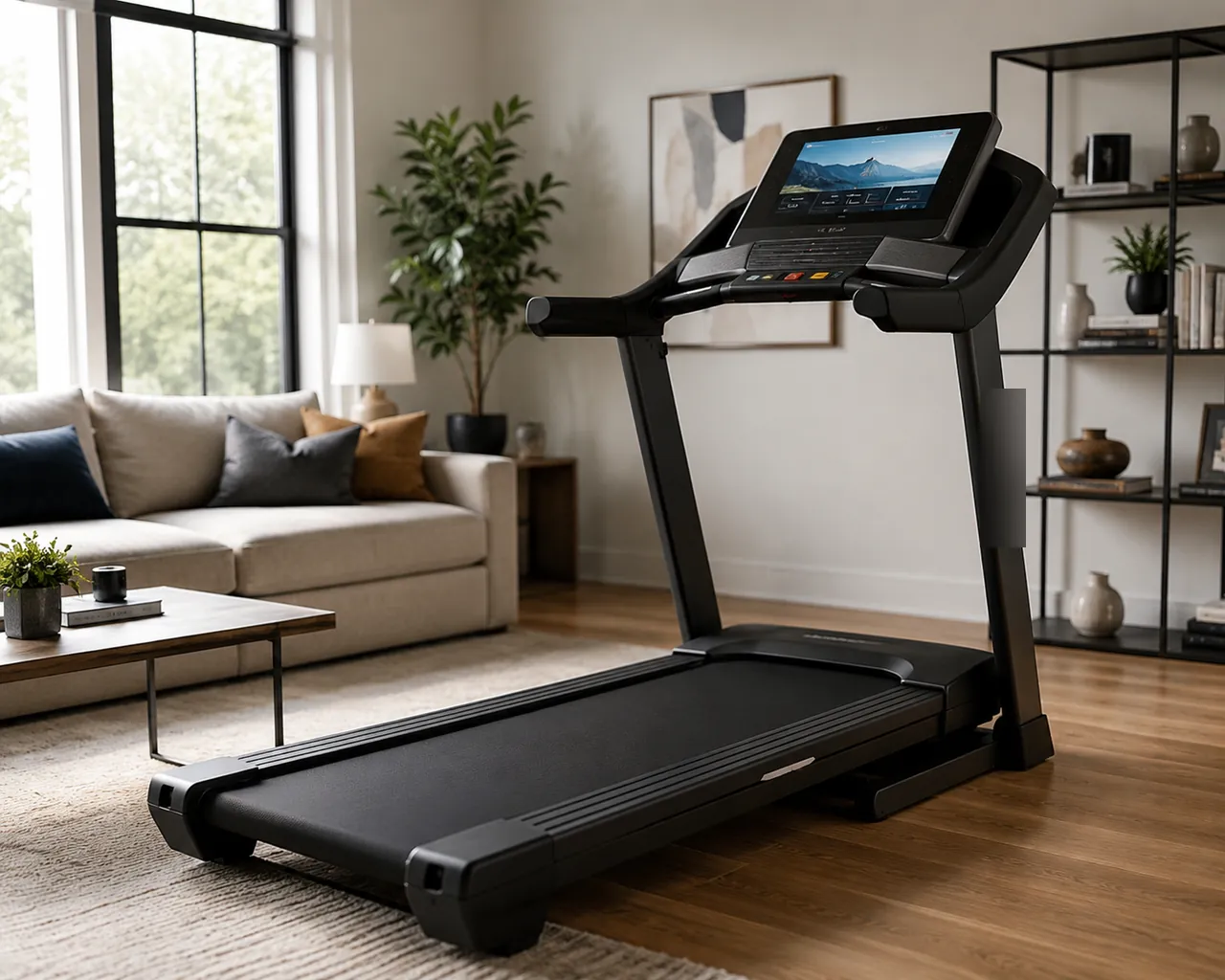
His neighbor had bought a treadmill on Amazon — a Chinese brand. The motor started and immediately stopped, a fault mode that requires actual diagnostic work, not a canned troubleshooting response. His neighbor called the brand’s US 800 toll-free number, which connected to the Callnovo team handling the account.
The engineer got involved because his neighbor isn’t technical. As an electrical contractor, he sat in on the calls — the first one and every one after — and worked through the remote diagnostics alongside the agents himself. That’s what makes the review worth reading: the man evaluating the support team wasn’t grading from a distance. He was in the diagnosis with them, call after call, testing every answer in real time — which is exactly why he could tell a knowledgeable one from a scripted one.
What followed was 17 days of support involving four agents — Mauricio, Daniel, Sarah, and Anna — multiple remote diagnostic sessions, several replacement parts shipped at no cost, repeated installation guidance, and, at the end, a small bottle of silicone lubricant included as a thank-you. The problem got solved. The engineer wrote a thousand words about the team that solved it. The brand forwarded his review to Callnovo without changing a word.
Why fitness equipment support is harder than it looks
Treadmills, stationary bikes, ellipticals, rowers — the after-sales requirement for home fitness equipment is structurally different from most consumer categories. When a motor stops immediately after starting, the diagnostic path isn’t obvious.
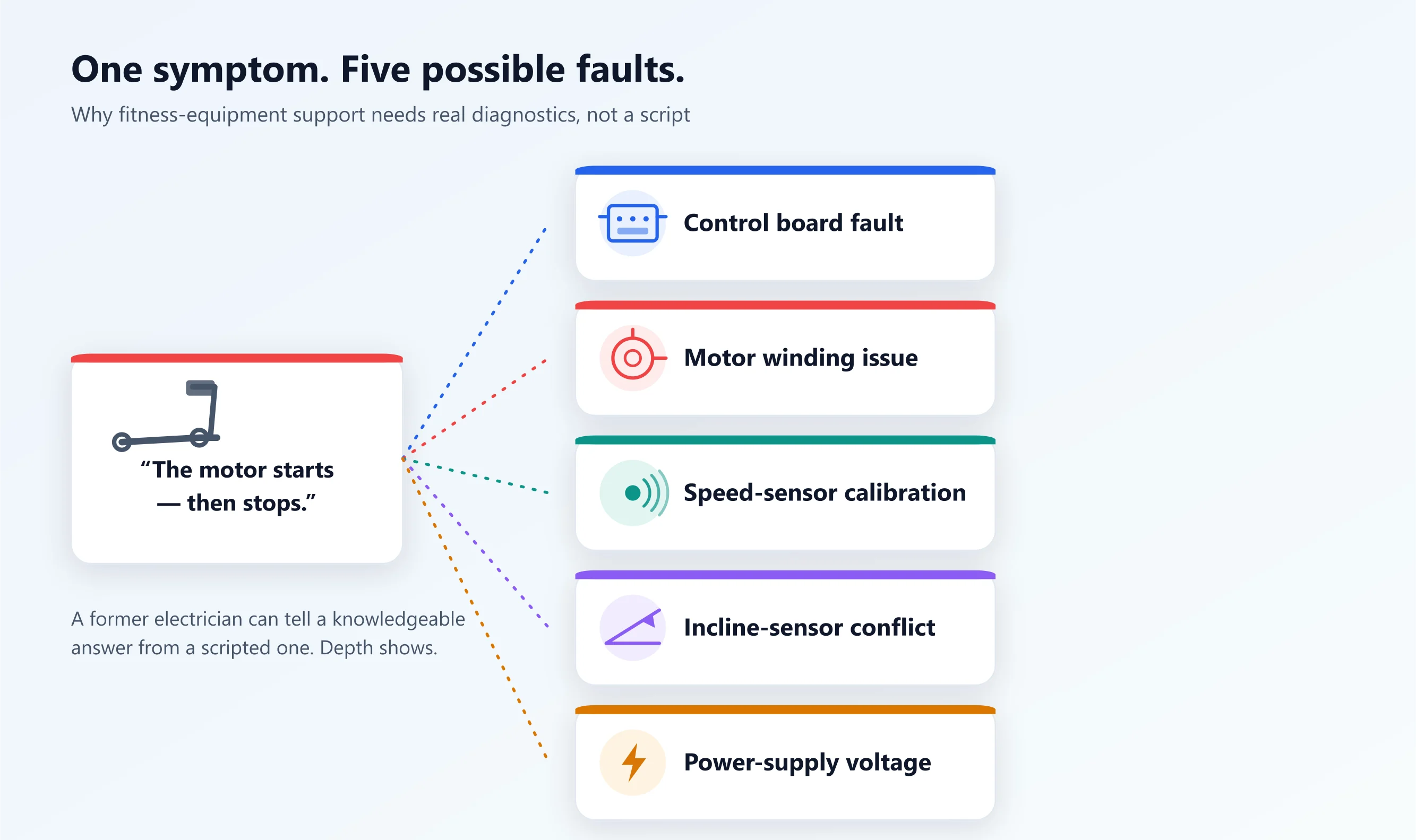
A customer describing “the motor starts and stops” isn’t giving you enough to diagnose the fault. You have to ask the right questions in the right sequence, interpret the answers correctly, and know which replacement part addresses which specific failure mode. That requires product knowledge that doesn’t come from reading a manual — understanding how the machine works, what failure modes look like from the outside, and how to guide a non-technical user through a diagnostic process without losing them.
Callnovo’s fitness equipment teams go through four to eight weeks of specialized product training before handling any contacts — equipment structure, operating principles, common fault codes, remote diagnostic protocols, and safety standards — and every agent passes a certification assessment before going live. The engineer in this review was working with people who actually understood what might be causing his neighbor’s treadmill to fail. That’s not a small thing when the customer is a former electrical contractor who can tell the difference between a knowledgeable answer and a scripted one.
What 17 days of support actually looked like
The case didn’t resolve in one call. These rarely do when the fault is intermittent or when the first replacement part doesn’t address the underlying issue. The 17-day timeline was the result of a real diagnostic process — not slow service, but the actual time required to work through a problem that wasn’t straightforwardly solvable.
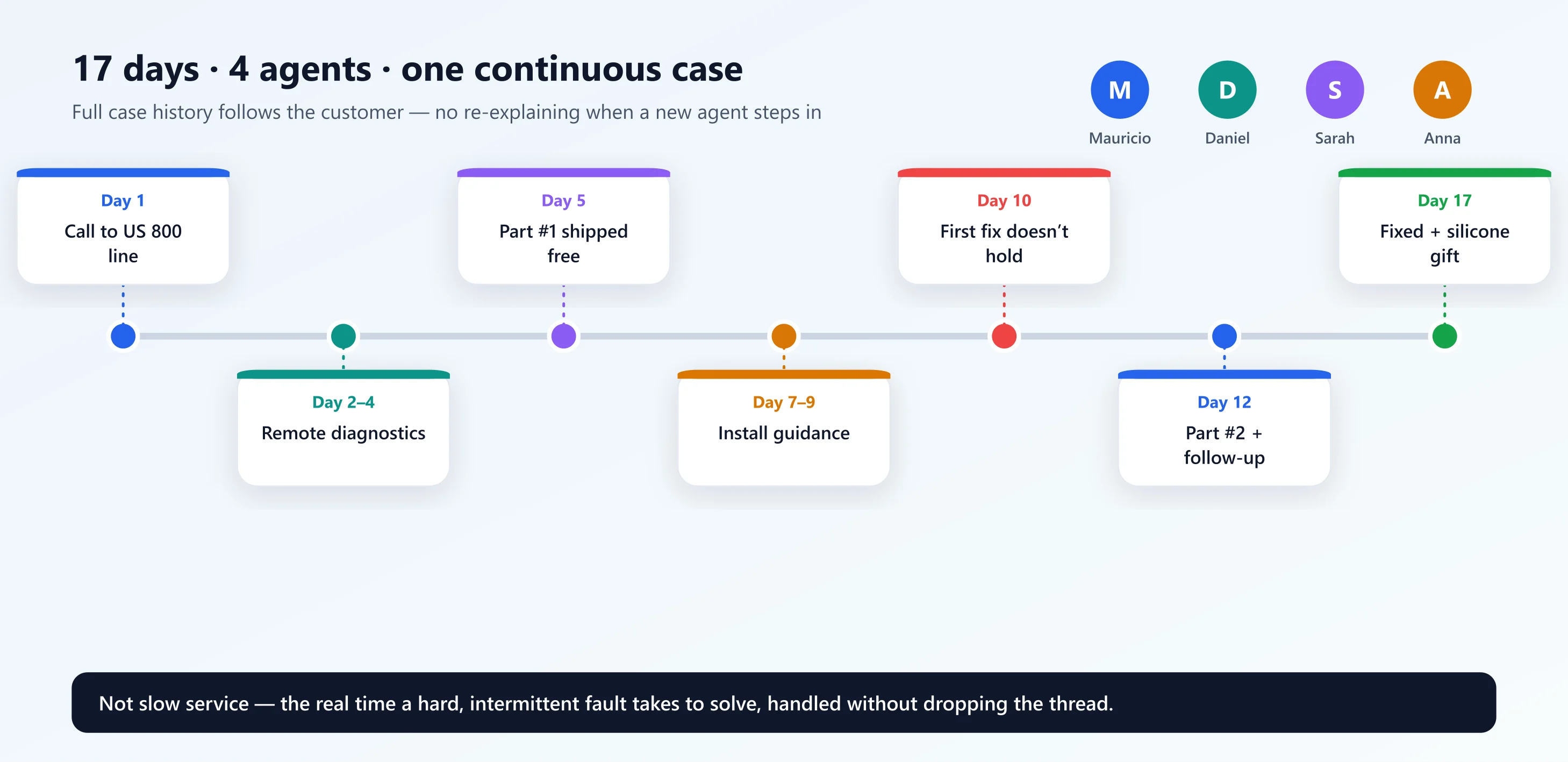
Mauricio, Daniel, Sarah, and Anna each played different roles. Phone callbacks to check on progress. Proactive follow-up when parts were in transit. Additional diagnostic guidance when the first fix didn’t hold. A consistent pattern of being reachable, being informed, and not requiring the customer to re-explain the situation every time a different agent was involved — because the complete case history followed the customer, not the individual agent.
The silicone lubricant at the end was a small decision with outsized impact. Someone on the team judged — based on the customer’s patience throughout a lengthy and genuinely frustrating process — that this was a situation where something beyond the standard resolution was appropriate. That judgment wasn’t in a script. It was a human read of the emotional context of a specific situation, made by someone with enough autonomy to act on it.
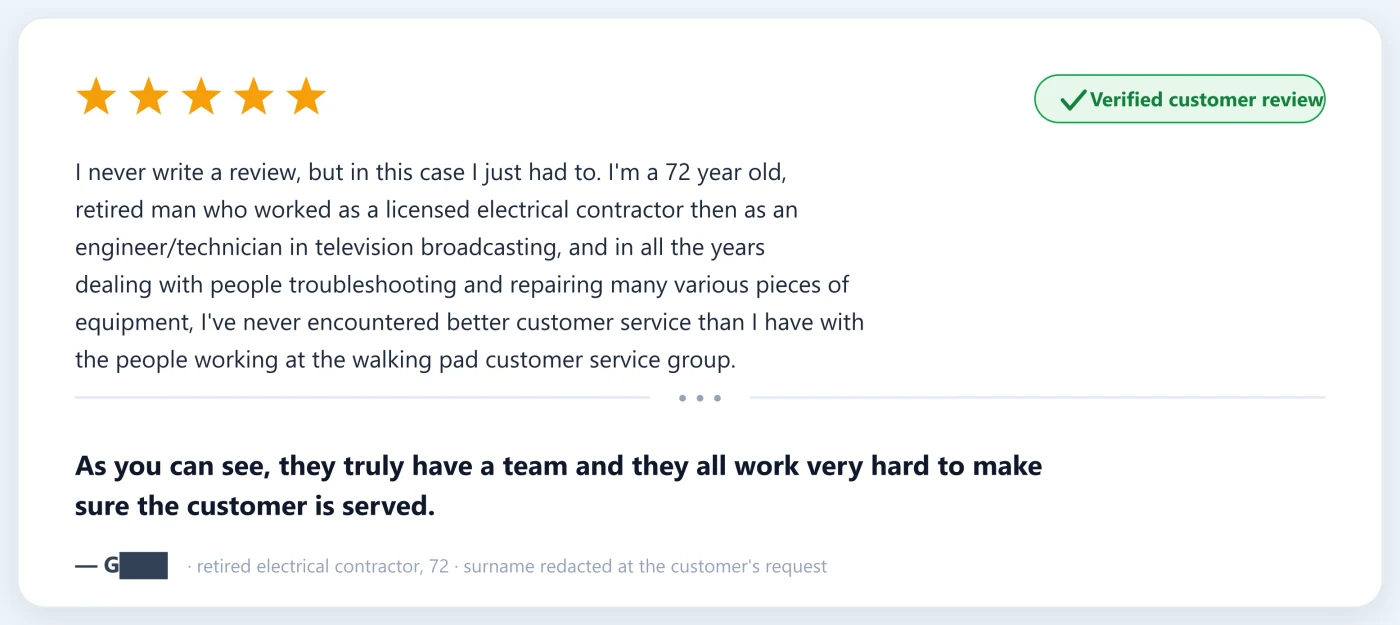
They truly have a team where everyone works hard to ensure the customer is being served.
From the customer's review, Retired electrical contractor, 72
That is not a sentence that gets written about an interaction where the customer felt processed. It gets written when the customer felt that real people were actually trying to help.
What AI does in this model — and what it doesn’t
This case sometimes gets used as an argument against AI in customer service. It shouldn’t be. It’s an argument for getting the AI–human division right.
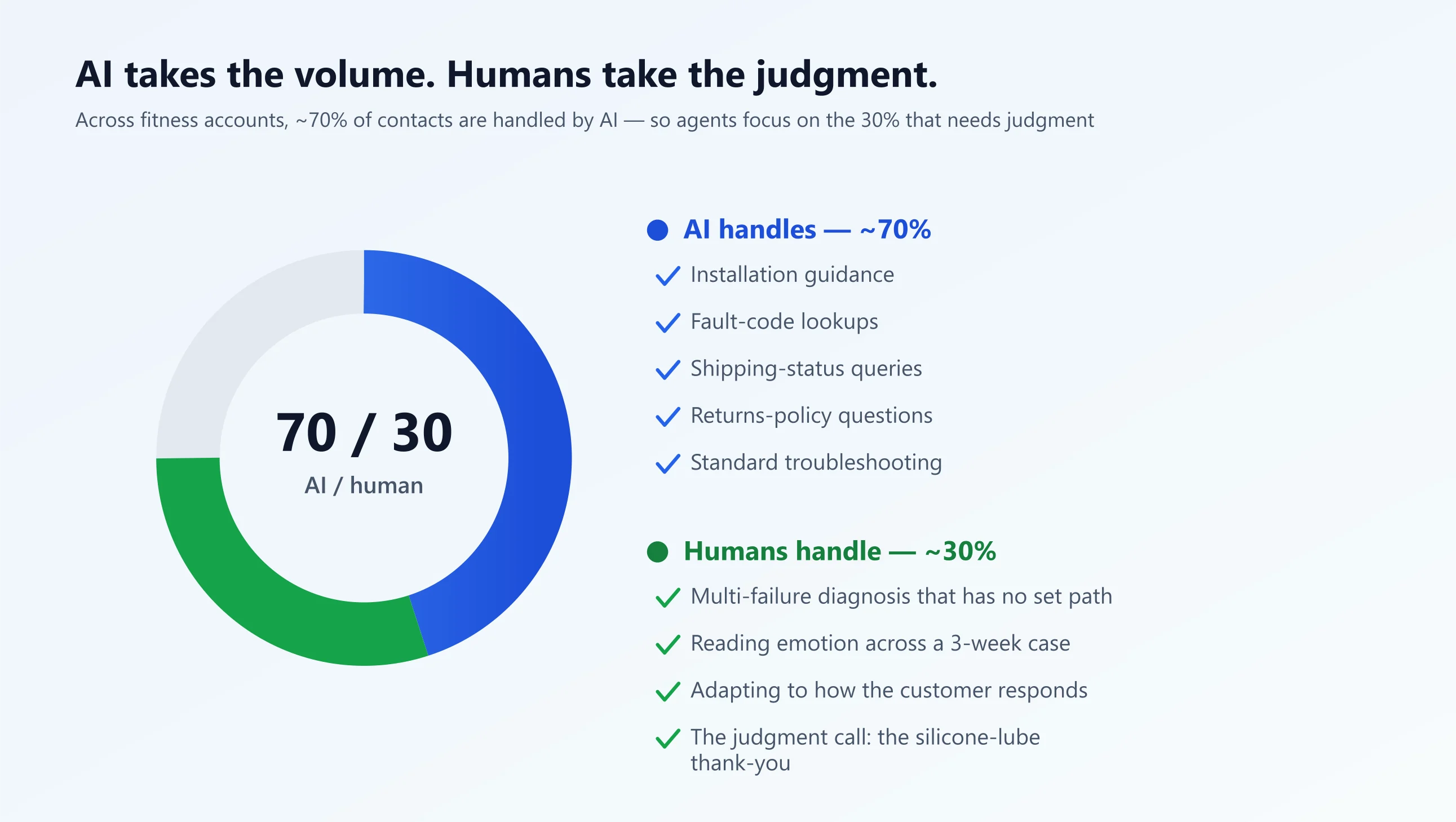
Across Callnovo’s fitness accounts, AI handles roughly 70% of incoming contacts — installation guidance, fault-code lookups, shipping status, returns questions, standard troubleshooting sequences that follow a known path. These don’t require emotional attunement or adaptive judgment; they require accurate information delivered quickly, at any hour, in any language, without waiting for an available agent.
What happened with the engineer’s neighbor’s treadmill was in the other 30%. Multiple failed diagnostic attempts. A customer whose patience was being tested after weeks without a working machine. A situation where the team needed to adapt based on how the customer was responding, not just what they were saying. A judgment call about whether to send the lubricant. None of that is what AI should be doing — not because AI can’t generate a response, but because that judgment is exactly what human agents are better at.
The market context for fitness equipment brands
Home fitness is a high-stakes category from a support perspective. Independent estimates put the global home fitness equipment market at roughly $13 billion in 2026, growing in the mid-single digits — with the United States, Germany, and the United Kingdom among the largest destinations for Chinese-manufactured equipment.
High unit prices mean customers have real money invested. High return costs mean a return that better support could have prevented is an expensive outcome — processing a return can run 20% to 65% of an item’s value, and for heavy equipment the freight alone is significant. High technical complexity means customers who can’t get good technical help are more likely to give up and return the product than customers in simpler categories.
For the brand in this case, the European market — UK, French, German, and other multilingual coverage — runs on the same model with Callnovo’s European team: language-matched, product-trained, certified before going live. The same approach that produced a thousand-word review from a retired American engineer is running across multiple languages and markets for the same brand.
What fitness equipment brands should take from this
The review wasn’t the result of a perfect product. The treadmill had a motor fault that took multiple diagnostic attempts and multiple parts to resolve. The review was the result of how the team handled an imperfect situation — with competence, persistence, and consistent personal attention that most customers don’t expect and rarely receive.
For fitness brands selling in North America and Europe, three things decide whether a difficult case ends with a customer who stays or one who returns:
- Technical knowledge depth. An agent who understands how a treadmill’s motor control system works is a different resource than one who can look up a fault code. The first can adapt to what the customer describes; the second can only match symptoms to a list. For equipment with multiple possible failure modes, only the first kind can work a problem that doesn’t follow a standard path.
- Continuity across a multi-interaction case. The neighbor dealt with four agents across 17 days, and it felt coherent because each had the complete case history and didn’t make him restart. Without a unified contact record, this would have been four disconnected interactions instead of one sustained effort.
- The judgment to go beyond the script. The silicone lubricant cost almost nothing. The decision to include it required a human read that this customer, in this situation, had earned something extra. That’s not a policy you can write — it’s a culture you build, and a level of agent autonomy you allow.
I never write a review. But this time I just had to.
From the customer's review, Retired electrical contractor, 72
A 72-year-old engineer who never writes reviews wrote one. The brand that earned it didn’t do it with a perfect product. They did it with a team that actually showed up — for 17 days, across four people, through multiple failed fixes, until the problem was solved.
FAQ
Why is fitness equipment customer support harder than other product categories?
Because a single symptom can map to many different faults. When a treadmill motor starts and immediately stops, the cause could be a control board fault, a motor winding issue, a speed-sensor calibration problem, an incline-sensor conflict, or a power-supply irregularity. Diagnosing it means asking the right questions in the right order and interpreting non-technical answers — product knowledge a script can’t replace. Callnovo’s fitness agents complete four to eight weeks of specialized training and pass a certification before going live.
How long should a complex treadmill repair case take to resolve?
It depends on the fault. An intermittent motor fault that needs remote diagnostics and one or more replacement parts can legitimately take weeks, not one call. In this case it took 17 days across four agents. That wasn’t slow service — it was the real time required to work through a problem that didn’t follow a standard path, handled without making the customer restart each time.
What should AI handle versus human agents in fitness equipment support?
AI should handle the high-volume contacts that follow a known path — installation guidance, fault-code lookups, shipping status, returns questions, and standard troubleshooting. Human agents should handle the cases that need judgment: multi-failure diagnosis with no set path, reading a customer’s emotional state across a multi-week case, and deciding when a small gesture beyond the standard resolution is warranted. Across Callnovo’s fitness accounts, AI handles roughly 70% of contacts so agents can focus on the 30% that needs them.
How do you keep a multi-day, multi-agent support case coherent?
With a unified contact record. Every interaction is logged to one case history that any agent can pick up, so the customer never has to re-explain the situation when a different agent steps in. In this case four agents handled the same case across 17 days and the experience felt like one sustained effort rather than four disconnected calls.
Does customer service actually affect fitness equipment returns and reviews?
Yes. Fitness equipment has high unit prices, high return costs, and high technical complexity, so a customer who can’t get good technical help is more likely to return the product than in simpler categories. Good support prevents avoidable returns and, occasionally, earns a customer who writes a thousand-word review on the brand’s behalf.
About Callnovo
Callnovo builds and staffs dedicated, product-trained customer-support teams for cross-border brands across 65+ languages, backed by the HeroDash platform — unified omnichannel handling with AI quality inspection and a single case history per customer. For technical categories like fitness equipment, agents complete weeks of specialized product training and pass certification before going live, in North America and Europe alike.
Selling fitness equipment or technical hardware in North America or Europe and thinking through what support quality actually requires? Explore Callnovo’s specialist support teams and the HeroDash platform, or talk to our team about what building this looks like for your product and markets.
Sources
- Fortune Business Insights — Home Fitness Equipment Market
- NRF & Happy Returns — 2024 Retail Returns Report ($890B; returns cost 20–65% of item value)
Customer review quoted with brand permission. Agent names used with permission. Market-size figures are industry-research estimates for 2026.